

The HPT Model provides a roadmap for effective change management that is systematic and systemic in its approach. Join us for a breakdown of the three main sections and an explanation of how they are interconnected.
Change Management
Human Performance Technology (HPT), also known as Human Performance Improvement (HPI), is the application of evidence-based practices to diagnose and improve workplace performance. The HPT Model is a responsive, adaptable, and accountable tool that helps ensure that organizational change is both systematic and systemic and can be sustained over the long term. Change management is integral to the process and is included at every stage of the model. To maximize results, it is best not to skip any steps in the model. When examining the simplified HPT Model, note that evaluation is continuous throughout the change process. Although organizations often evaluate change before implementation, this crucial step is frequently overlooked once the intervention is in place. In fact, only slightly more than 50 percent of organizations evaluate participants' behavioral changes and organizational outcomes post-implementation (Pulichino, 2007, as cited in Chyung, 2019, p. 7). Following the HPT Model, both linear and cyclic approaches lead to a thorough diagnosis of the business need or opportunity. The HPT Model was initially designed by William Deterline and Marc Rosenberg in 1992 and updated by Darlene M. Van Tiem, CPT, PhD., James L. Moseley, CPT, EdD, and Joan Conway Dessinger, CPT, EdD in 2004 and again in 2012 (VanTiem, Moseley, & Dessinger, 2012, pp. 10 & 12). Below is a simplified version of the HPT Model that we will expand upon in this text.

Performance Analysis
Let's start by breaking down the model in the top-left, under Performance Analysis. The first stage of the HPT Model identifies a need or opportunity by analyzing the organization and its environment to determine the desired work performance and the actual performance state. This process helps identify performance gaps and is followed by a root cause analysis to ensure the underlying cause is addressed and valuable resources aren't wasted.

Organization and Environment
Performance analysis isn't just about identifying what isn't working; it also involves determining what is currently supporting the organization and its employees. One way to make this determination is to conduct an organizational analysis, which involves understanding what is essential to the business. It means understanding the vision, mission, values, and goals the company aspires to achieve, as well as the strategies it uses to do so. It also involves understanding the issues driving the need or opportunity for change to determine the desired performance. The second way to determine what supports and what does not support the organization is to conduct an environmental analysis. This step examines the organization from multiple viewpoints: the world, the workplace, work, and the worker. This analysis helps determine the current performance.
Organizational Analysis
- Vision, mission, and values
- Goals and strategies
- Critical issues driving change
Environmental Analysis
- World: Culture, society, and social responsibility
- Workplace: Organization, resources, tools, stakeholders, and competition
- Work: Work flow, procedures, responsibilities, and ergonomics
- Worker: Knowledge, skill, capacity, motivation, and expectations
Gap and Cause
The difference between the desired performance and the actual performance is known as the performance gap. A performance gap does not indicate a problem; instead, it suggests an opportunity that would otherwise have gone unnoticed. Whether this opportunity is a deficiency that requires improvement or a proficiency that needs enhancement, gaps must be prioritized, and then the cause identified. There are multiple root cause analysis tools that help in this process, and the Six Boxes Model of Behavior Influences serves as a guide to ensure the cause analysis is conducted systematically and systemically.
The Six Boxes
1. INFORMATION
Do employees know what is expected of them?
Are they receiving clear and timely feedback on their performance?
2. RESOURCES & TOOLS
Do employees have the materials, tools, and systems needed to perform effectively?
3. INCENTIVES & MOTIVATION
Are rewards, recognition, and consequences aligned with desired performance?
4. KNOWLEDGE & SKILLS
Do employees have the skills, knowledge, and experience necessary to perform?
5. CAPACITY & INDIVIDUAL ABILITY
Do employees have the physical, mental, or emotional ability to perform?
6. MOTIVATION & CULTURAL FIT
Do employees want to perform well?
Does the organizational culture support high performance?
For more information on how to use Six Boxes, check out our article, Needs Assessment for Instructional Design
Intervention
Interventions are processes that facilitate change, and the root cause determines which to select to achieve the desired outcome. They are both defined and deliberate, regardless of their reach. Also, multiple interventions may be necessary to address the performance gap. The process of intervention selection is typically a collaborative effort, and the best intervention(s) will vary from one organization to another, based on information collected during the performance analysis and the outcomes of multiple selection phases, where interventions are prioritized (Van Tiem et al., 2012, pp. 362-369). Other factors to consider when selecting interventions are the return on investment, sustainability, and accountability. In other words, interventions need to be cost-effective, easy to maintain, and require a champion or sponsorship to be successful.
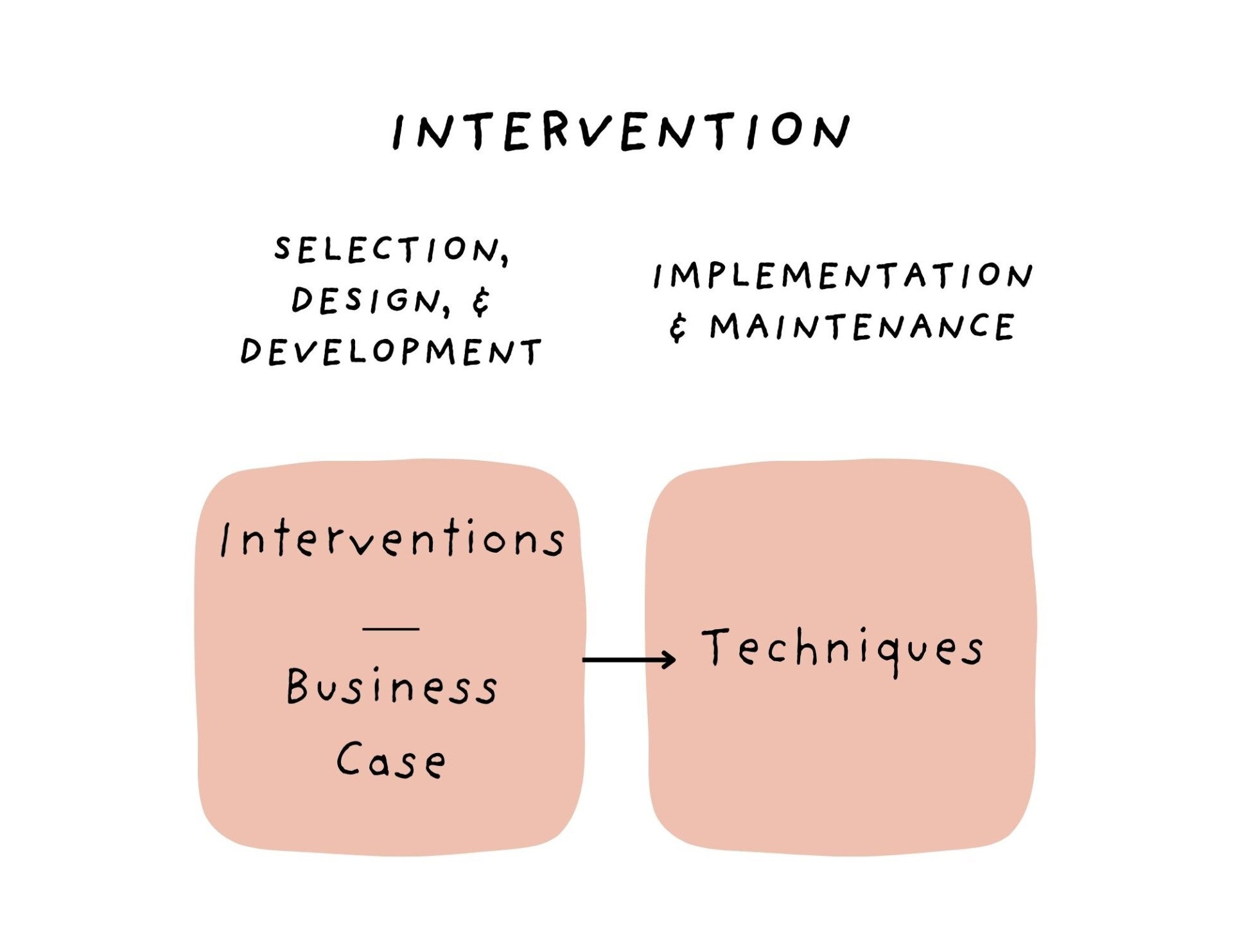
Once interventions are selected, how they will be implemented is designed and developed. An action plan is created, which includes the project's scope, purpose, roles, feasibility, and an approximate timeline. The plan also serves as the business case to gain company support for the project's implementation. Thus, all data collected should be organized and presented in a manner that clearly defines the proposed change, its alignment with the organization, and why the project will benefit it. Stakeholders are a crucial element in change management, and careful thought should be given to their involvement in the process. Another way to ensure the project's maintenance, or sustainability, is to engage sponsors through their support and to communicate clearly, consistently, and on time with leadership (Lane & Green, 2013). Any future roles that may be needed as the intervention matures should be accounted for, as should any possible resistance to the changes that will occur.
Intervention Types
- Learning
- Performance Support
- Job/Work Design
- Personal Development
- Human Resource Development (HRD)
- Organizational Communication
- Organizational Design & Development
- Financial Systems
- Other
Implementation Techniques
- Partnering, Networking, & Alliance Building
- Process Consulting
- Employee Development
- Communication
- Project Management
- Other
Evaluation
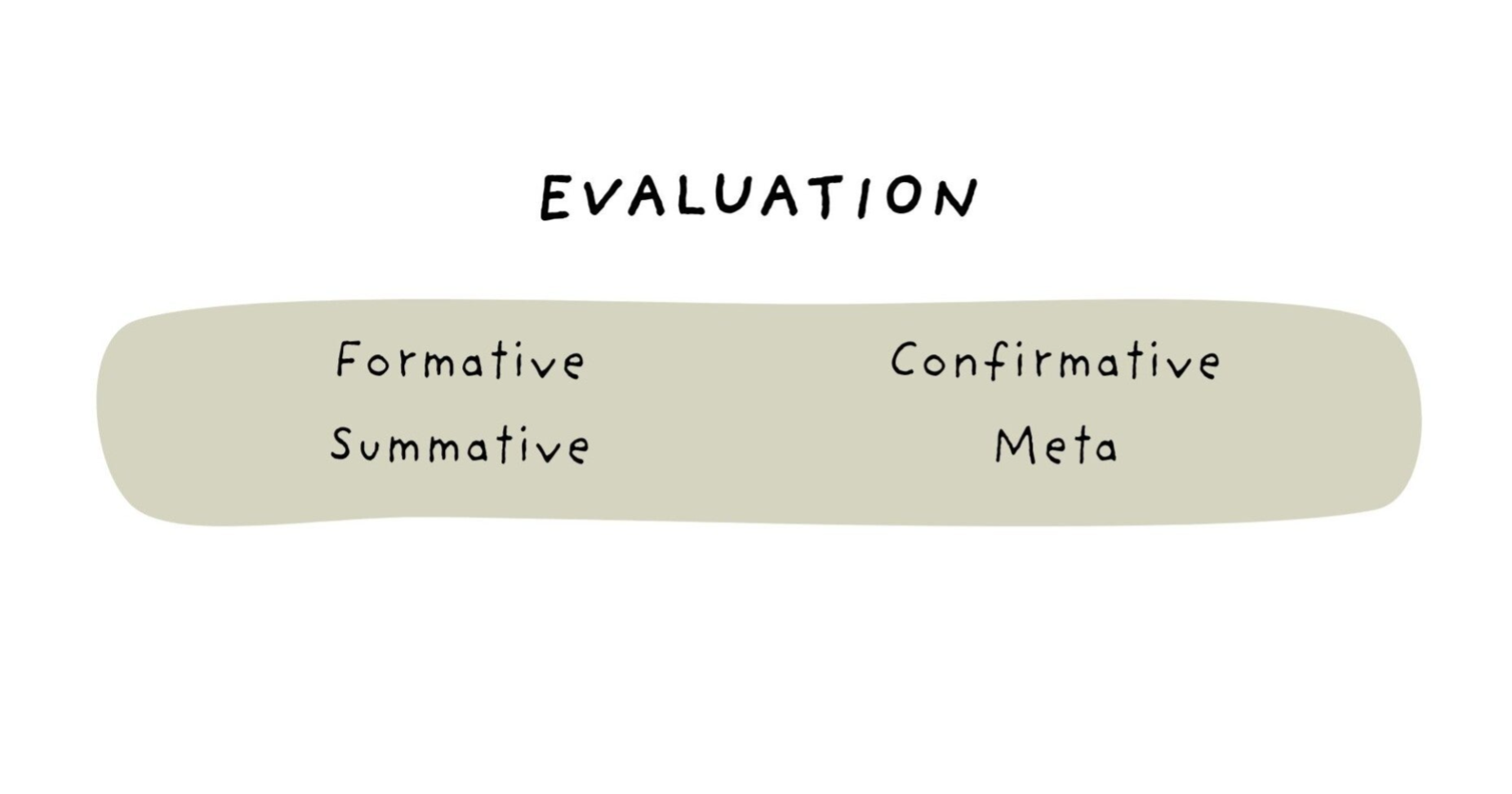
To maintain confidence in the implementation of the change management, it is vital to measure and report results to management, stakeholders, and, if applicable, employees. A pre-formative (initial) evaluation is conducted early on in the initiative, such as during the performance analysis. Collecting this data early on helps establish a baseline for future comparisons, identify knowledge gaps, and inform the intervention's development and design.
Types of Evaluations
Formative
Evaluations that are conducted during the implementation of an intervention. Gathering data in the middle of a process helps inform real-time decision-making about potential changes and remedies. Formative evaluations also provide feedback on employee reactions to the changes, whether positive or negative. Lastly, the data help determine whether the intervention is yielding the desired result.
Summative
Evaluations conducted at the end of the implementation phase provide feedback on the impact of the process change. Results are compared to the pre-formative and formative data collected. Additionally, assessments are used to test and measure the acquisition of the desired outcome. The focus is on the program's relevance, the project's success in achieving the desired result, and the intervention's cost-effectiveness.
Confirmative
A confirmatory evaluation is conducted after a period of time has passed to determine the intervention's long-term effectiveness and impact(s) on performance and the organization. Confirmatory data provides information on changes that may be needed to improve the intervention, insight into other possible interventions, and lessons learned that can be used in future implementations.
Meta
An evaluation process that examines the aforementioned evaluation types to answer the questions, 'what' and 'why'. This process is sometimes skipped; however, it provides valuable information and examines the evaluation process to identify improvements that enhance the quality and effectiveness of the entire process.
In Summary
The HPT Model is a valuable tool that systematically examines organizational challenges to determine contributing factors, enabling the application of strategic interventions. Data collection and analysis play a pivotal role in the process and provide a solution-neutral position (MacBain, 2024, p. 192). Multiple factors must be considered when determining the best intervention for the organization and the performer. Remember, change management is both a linear and non-linear process with many moving parts that help ensure a successful outcome. The HPT Model is a helpful reference tool to ensure all aspects of a change management initiative are included when pursuing a solution.

Additional Articles
Why 'Being Agile' Matters More Than Ever
The relationship between Agile and project management (PM) has fundamentally changed over the years. What were once seen as competing approaches are now integrated into a single capability: delivering value in complex, fast-changing environments. Market volatility, rapid technological change, and evolving workforce expectations have forced a shift in how work gets done. Organizations that rely solely on traditional PM struggle to adapt. Those who adopt Agile practices without changing how they think and operate fall into what many call “Agile theater.”
What Project Managers Need to Know About the Future of Work
If you’ve been following headlines about artificial intelligence, you’ve probably seen two extremes: AI is either going to eliminate jobs at scale, or it’s going to unlock unlimited productivity. Neither of those narratives is particularly useful if you’re actually responsible for delivering work.
The Role of Artificial Intelligence in Universal Design for Learning
Artificial Intelligence (AI) is increasingly integrated into educational and workplace learning environments. Within instructional design and human performance technology (HPT), AI tools offer scalable mechanisms for personalization, automation, analytics, and accessibility. When viewed through the lens of Universal Design for Learning (UDL), AI has significant potential to operationalize flexibility at scale. UDL emphasizes proactive design for learner variability (Meyer, Rose, & Gordon, 2014). AI technologies—particularly adaptive learning systems, generative AI tools, learning analytics platforms, and intelligent tutoring systems—can help designers implement UDL principles more dynamically than static course design alone.
Universal Design for Learning in Instructional Design and Human Performance
Universal Design for Learning (UDL) is an educational framework grounded in cognitive neuroscience and inclusive design principles that aims to improve learning for all individuals by proactively reducing barriers to learning. Developed by the Center for Applied Special Technology (CAST), UDL extends the architectural concept of universal design—originally articulated by Mace (1985)—into educational contexts. Rather than retrofitting accommodations after barriers are encountered, UDL calls for designing learning environments that are flexible and accessible from the outset (Meyer, Rose, & Gordon, 2014).
Needs Assessment for Instructional Design
A needs assessment is a systematic process for identifying gaps between the current state and the desired state in performance, knowledge, skills, attitudes, or conditions, and using that information to make informed decisions about whether and how to intervene. Roger Kaufman defines needs assessment as "a process for identifying needs and placing them in priority order on the basis of what it costs to meet the need versus what it costs to ignore it" (Dean & Ripley, 2016, p. 43).
Agile Meets AI
Agile is a mindset for approaching and executing projects. It uses multiple methods and frameworks depending on the project's goals and alignment with the Agile Manifesto. Four values align with the manifesto: individuals and interactions over processes and tools; working software over comprehensive documentation; customer collaboration over contract negotiation; and responding to change over following a plan (Project Management Institute, 2017). The highest priority is to deliver continuous value to the customer in short, regular intervals. These shortened work process cycles help mitigate risk, reduce waste, and enable quick responses to change, enabling continuous improvement.
References
Chyung, S. Y. (2019). 10-step evaluation for training and performance improvement. Thousand Oaks, CA: Sage.
Lane, P. B. & Green, B. K. (2013). Utilizing organizational change management best practices for the roll-out of an enterprise project management framework. Paper presented at PMI® Global Congress 2013—North America, New Orleans, LA. Newtown Square, PA: Project Management Institute.
MacBain, L., Hastings, N. B., & Handley, H. (2024). Revitalizing an ISPI chapter using the Performance Improvement/HPT Model: Performance analysis and intervention recommendations. Performance Improvement, 63(5), 184–195. https://doi.org/10.56811/PIJ-25-0009
VanTiem, D., Moseley, J.L., & Dessinger, J.C. (2012). Fundamentals of performance improvement: Optimizing results through people, process, and organizations (3rd ed). San Francisco, CA: Pfeiffer.
Add comment
Comments