Agile Meets AI
High rates of change, complexity, and risk require techniques that enable adaptability, rapid response times, and frequent feedback loops.
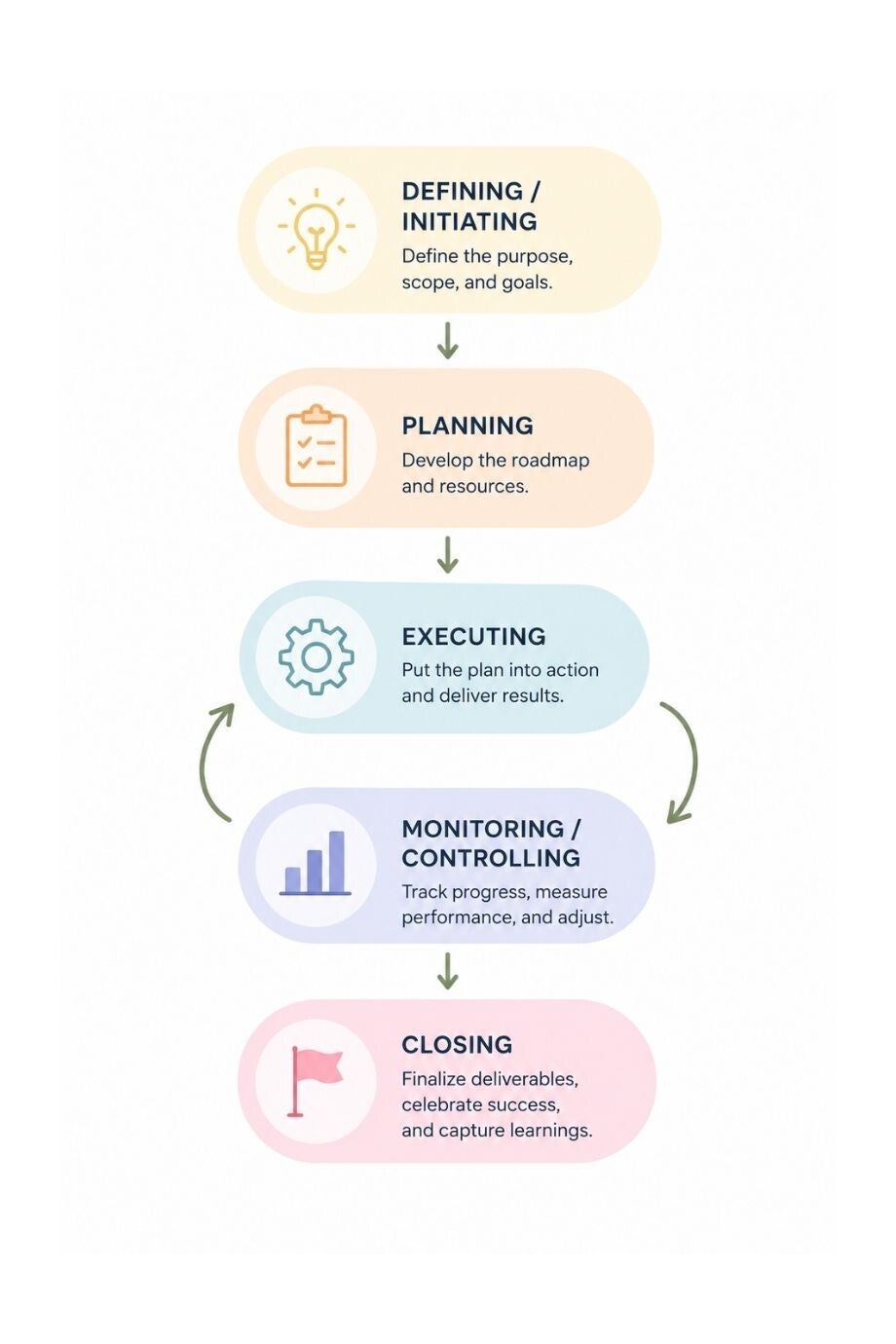
Project management is a crucial discipline that bridges the gap between an idea and its execution. It involves applying knowledge, skills, tools, and techniques to meet the specific requirements of a particular project while considering the limitations of time, resources, and performance. It involves defining, planning, executing, monitoring, and closing, while ensuring that each element of the project is completed on time, within budget, and meets or exceeds the customer's expectations. In a world where change is constant, project management provides a structured approach to navigating the complexity of integrating the technical and sociocultural dimensions of a project.
The project life cycle is the framework that guides a project from inception to completion. It depicts the timing of each significant event in the project's timeframe, each with its own set of activities and deliverables. The project lifecycle also enables project managers to assess and mitigate risks effectively. Although the lifecycles can vary across industries, the most common core phases are outlined below.

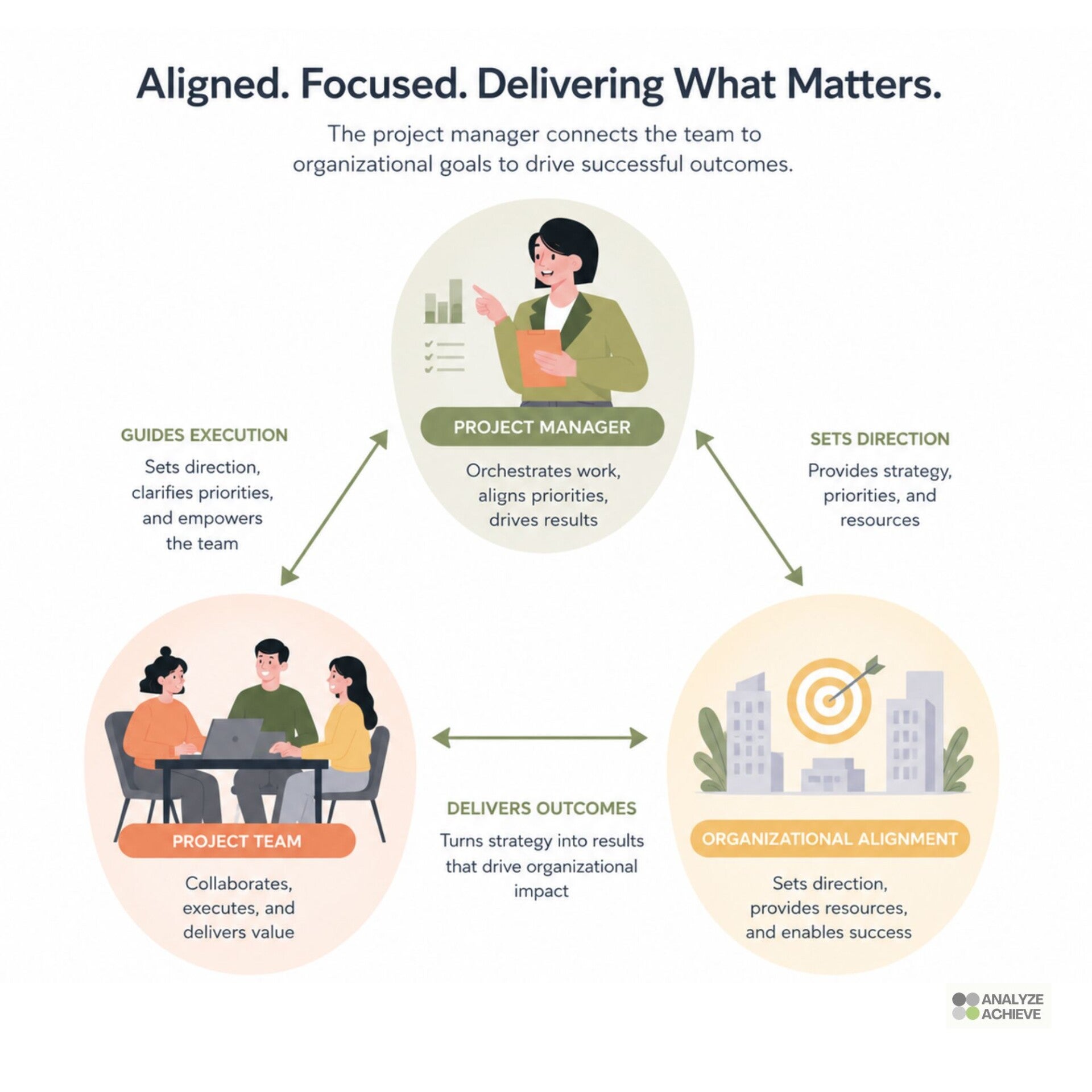
Project managers play a pivotal role, responsible for planning, executing, and closing projects to ensure they meet the desired objectives.

Project teams are the backbone of successful project management, comprised of individuals with diverse skills and expertise who work together to achieve project objectives.

Aligning projects with an organization's strategy is crucial for ensuring that projects harmonize with and support overall business objectives.
Project management is a crucial discipline that ensures the successful completion of projects. By understanding the project life cycle, the role of a project manager, the dynamics of project teams, and the importance of strategic alignment, organizations can execute their projects effectively and efficiently. Project management will continue to be a vital tool for driving innovation and business value. Whether you're a seasoned project manager or new to the field, understanding the key components of project management will prepare you with the tools and knowledge to succeed in today's dynamic global environment.
Dec 8, 2025
High rates of change, complexity, and risk require techniques that enable adaptability, rapid response times, and frequent feedback loops.
To ensure the accuracy and completeness of our work for this page, we utilized the "PMBOK Guide" from the Project Management Institute, as well as "Project Management" by Erik W. Larson and Clifford F. Gray.