Needs Assessment for Instructional Design
To maintain and improve, you first need to assess or measure your current capability.
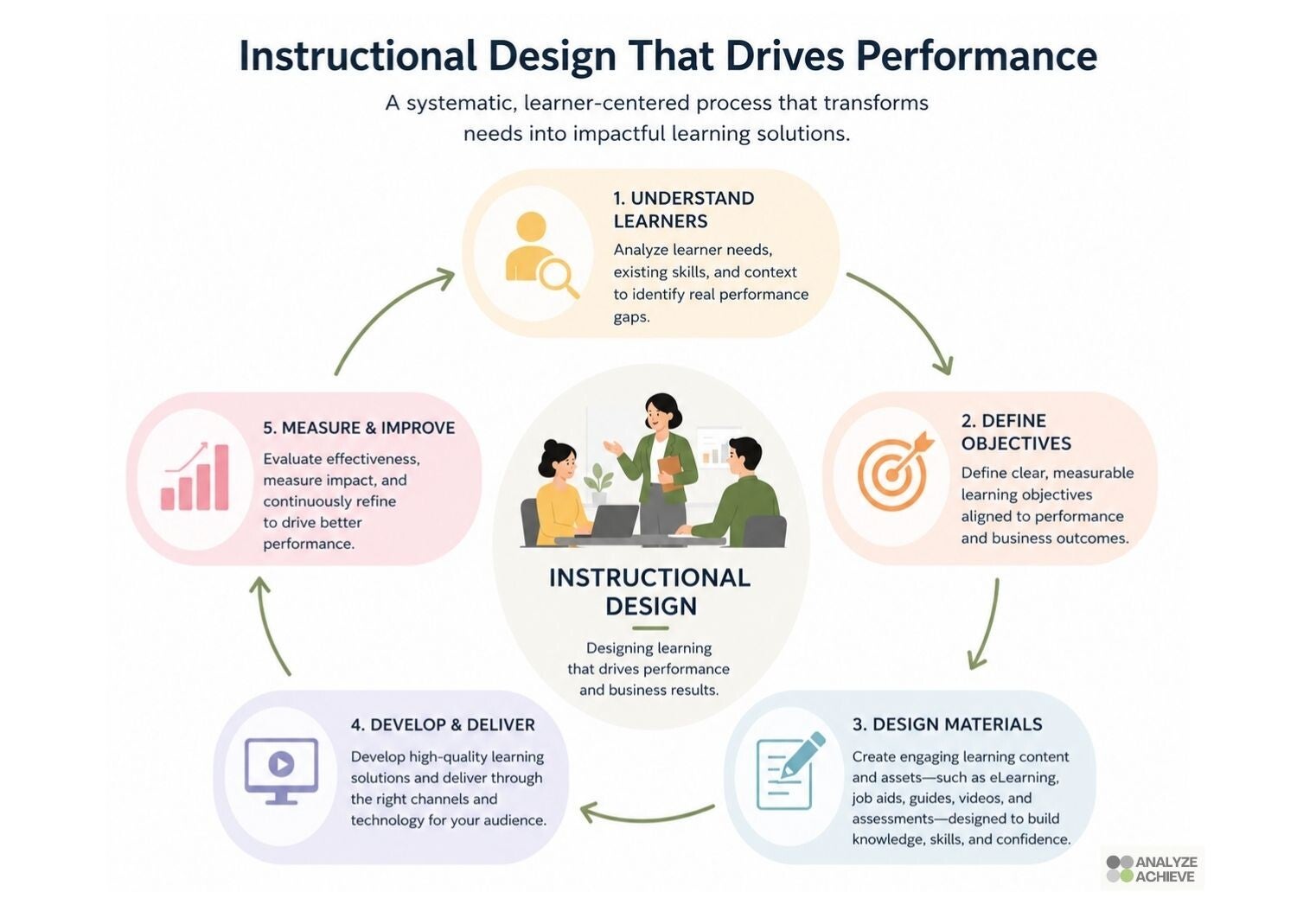
Instructional design (ID), also referred to as instructional systems design, is the systematic process of creating educational programs and materials consistently and reliably. It involves analyzing learners' needs and crafting experiences that enable them to acquire knowledge and skills effectively. The primary goal of instructional design is to make learning more efficient, engaging, and cost-effective. It involves not just the creation of content but the thoughtful integration of technology, pedagogy, and psychology to enhance learning.

A key step in ID is to gain a comprehensive understanding of the learners, which involves collecting data on their demographics, prior knowledge, learning preferences, and any accessibility challenges they may encounter. By gaining insight into the learners, instructional designers can effectively customize the content to address the specific needs of their audience.
Once the data is collected, creating detailed learner personas helps to visualize the target audience. These personas guide the design process, ensuring that the material speaks directly to the learners' interests and learning styles.

Learning objectives serve as the foundation of ID. They outline the skills and knowledge learners should possess upon completing a course or module (Hardy, 2025, p. 2). Clearly defined, measurable objectives not only provide clarity for both instructors and learners regarding expected outcomes but also facilitate the assessment of knowledge acquisition after the learning experience has occurred.
A popular framework used in defining learning objectives is Bloom's Taxonomy, which categorizes educational goals into cognitive, affective, and psychomotor domains. Using research-based frameworks as a guide helps designers create comprehensive learning outcomes that meet the desired outcomes (EBSCO, n.d.). Two additional popular frameworks among many are ADDIE and SAM.

After establishing the objectives, the next step involves designing instructional materials that are engaging and customized to the learners' existing understanding and future needs. Whether utilizing videos, e-Learning platforms, or written content, the essential goal is to keep learners engaged and enhance comprehension without overwhelming them.
Creating storyboards and prototypes helps visualize the course structure and flow. This process enables refining the content to ensure it aligns with the learning objectives. Storyboarding proves especially useful when developing branching-scenario learning objects and when working with multiple stakeholders and subject matter experts (SMEs).
Technology is essential in contemporary ID. From Learning Management Systems (LMS) to educational applications, technology can significantly enhance the learning experience and improve access to education. The selection of appropriate technology underscores the importance of conducting a learner analysis as the initial step in the process, ensuring that learner motivation and skill levels are met (EBSCO, n.d.).
Incorporating multimedia elements, such as videos, podcasts, and interactive quizzes, can make learning more dynamic. These tools cater to different learning styles, ensuring a more inclusive approach.
Evaluation is a crucial part of the ID process. Collecting feedback from learners and instructors helps identify areas for improvement, guiding the iterative process of continuous improvement to ensure instructional materials serve as practical tools in the learning environment.
ID is a dynamic and essential field that plays a crucial role in developing effective educational programs. By understanding learner needs, defining clear objectives, designing engaging materials, leveraging technology, and continuously evaluating for improvement, instructional designers can create impactful learning experiences. Whether you're involved in education, corporate training, or simply interested in learning more, ID offers valuable insights into how we can better facilitate knowledge acquisition.
Jan 6, 2026
To maintain and improve, you first need to assess or measure your current capability.
Nov 24, 2025
When creating a scenario-based eLearning object, vital information can get lost or left for interpretation. This can cause confusion between departments and result in wasted time. That's where storyboarding saves the day!
References
EBSCO (n.d.). Instructional design. Retrieved from https://www.ebsco.com/research-starters/psychology/instructional-design
Hardy, Dorea M. (2025). Instructional design made easy: A beginner's guide. Silver Calico, LLC. Kindle Edition.